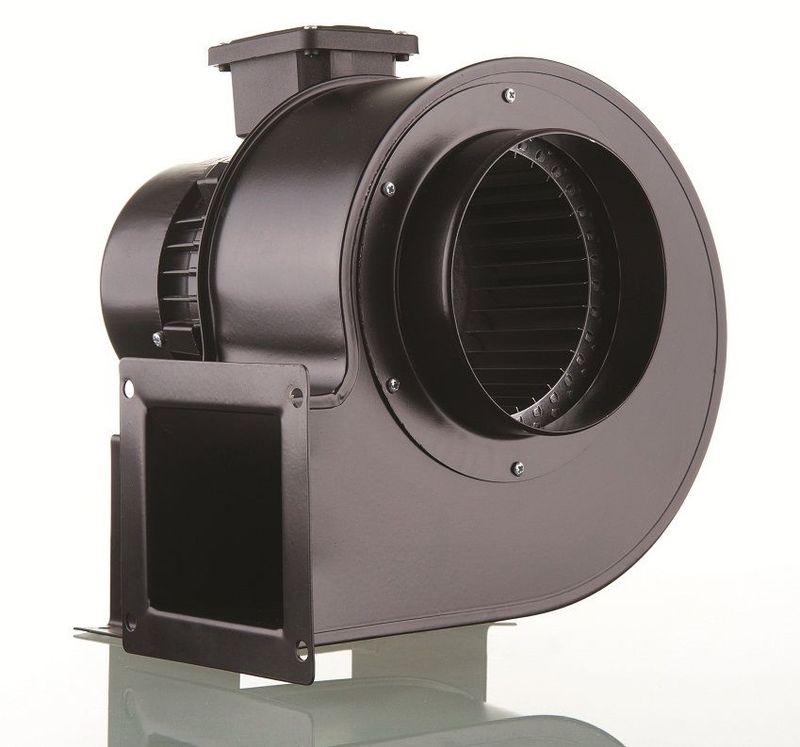
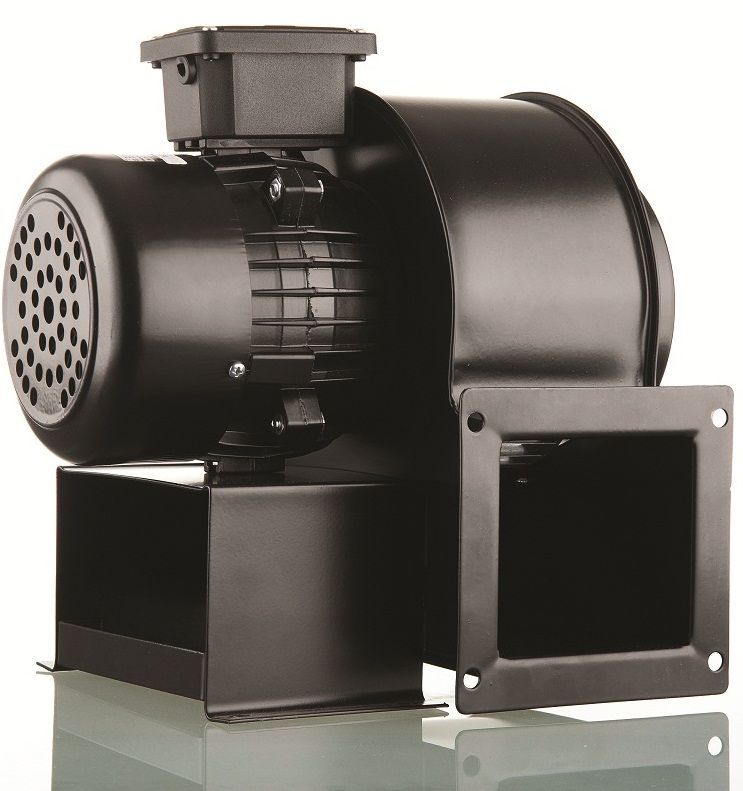
Dündar CT 18.2 Radial Centrifugal Fan / Aspirator, Three-Phase, 1700 m³, 2770 RPM
$163.33 $226.84 · In stock
Brand: Dündar · SKU: 104182200 · Warranty: 24 months
Other options
- Dündar CM 16.2 Radial Centrifugal Fan Extractor, Single-Phase, 1,500 m³, 2,700 RPM – $137.36
- Dündar CT 16.2 Centrifugal Fan, Three-Phase, 1,500 m³, 2,700 rpm – $136.46
- Dündar CM 16.4 Radial Centrifugal Fan (Single-Phase), 750 m³/h, 1,460 rpm – $128.42
- Dündar CT 16.4 Radial Centrifugal Fan (Three-Phase), 750 m³, 1,470 rpm – $127.52
- Dündar CM 18.2 Radial Centrifugal Fan (Single-Phase), 1,625 m³/h, 2,650 rpm – $163.33
- Dündar CM 18.4 Centrifugal Fan, Single-Phase, 1,000 m³, 1,430 rpm – $153.35
- Dündar CT 18.4 Radial Centrifugal Fan (Three-Phase), 1,100 m³/h, 1,445 rpm – $153.35
- Dündar CM 21.2 Radial Centrifugal Fan (Single-Phase), 2,500 m³/h, 2,700 rpm – $179.18
- Dündar CT 21.2 Radial Centrifugal Exhaust Fan, Three-Phase, 2,500 m³, 2,700 RPM – $186.83
- Dündar CM 21.4 Radial Centrifugal Fan (Single-Phase), 1,575 m³, 1,390 rpm – $166.03
- Dündar CT 21.4 Radial Centrifugal Fan Extractor, Three-Phase, 1,650 m³, 1,430 RPM – $167.83
Product description
Dündar CT 18.2 Features
|
Product Type |
V |
AC/DC |
~ |
Weight |
W |
Sound |
rpm |
m3/h |
|
CT 18.2 |
380 |
AC |
3 |
10.12 |
890 |
70 |
2770 |
1850 |
| MODEL | C | D | E | H | L | O | P | S | T |
| CT 18.2 | 312 | 180 | 280 | 345 | 167 | 140 | 110 | 130 | 145 |
What Is a Radial Fan?
Fans that generate a pressure difference are called radial fans. The air effect produced acts in the direction of centrifugal force. A centrifugal fan is a mechanical device used to move air or other gases. These fans have a rotating impeller, as in a pump, and a spiral housing in which the impeller sits. Air or gas enters from the center parallel to the axis, is pressurized and transferred tangentially around the impeller into the channels, and is discharged outward through the outlet. Due to the high pressures they generate, centrifugal fans are ideal for high-pressure applications such as drying and air-conditioning systems. Since all moving parts are enclosed and they also possess particle-reduction properties, they are ideal for use in air pollution and filtration systems.Radial Fan Applications
- In situations where the pressure and flow rates of axial fans are insufficient,
- In duct applications,
- In solid-fuel heating boilers,
- Hot air exhaust in high-temperature environments, general and industrial buildings,
- Warehouses, stockrooms, and storage facilities,
- Garages and public buildings, agricultural buildings,
- Commercial greenhouses,
- Large workshops,
- Paint shops,
- Factories,
- Environments containing dust and vapor,
- For cooling industrial machinery,
- Welding machines, transformers, compressors.
Radial Fan Casings and Impellers
- Radial casing made from cold-drawn high-quality DKP sheet metal,
- High corrosion resistance with environmentally friendly electrostatic epoxy powder coating, dynamically tested galvanized forward-curved radial impeller in accordance with ISO 1940, manufactured to EN 60335-2-80 standards
- High pressure and flow rate values achieved through inlet nozzle design,
- Air inlet protected by a guard against ingress of foreign objects,
- Sturdy and neat casing structure with special clinch-type casing assembly,
- Low noise level,
- Left and right orientation options for installation in any desired direction,
Radial Fan Motors
- Quality production without manual handling on high-technology CNC machines,
- Aluminum-finned motor casing with high thermal conductivity,
- Rotor balanced to ISO 1940 standards for extended bearing service life,
- High operating range for windings with insulation class F: −40 °C to +70 °C,* 230 V / 50 Hz single-phase fan motor,
- 400 V / 50 Hz three-phase fan motor
- Standards-compliant certified components,
- IP 54 protection class (IP 55 available on request),
- Variable frequency drive (VFD) control usable with three-phase fans.
Things to Consider When Selecting a Fan;
4 parameters should be considered when selecting a fan:- Required Air Flow Rate
- Pressure Losses
- Acceptable Noise Level
- Electrical Power Connection Type
| Environment | Air Change Rate |
| Auditoriums | 6-8 |
| Paint Ovens | 25-50 |
| Vault Rooms | 3-6 |
| Cinemas and Theaters | 5-8 |
| Commercial Kitchens | 15-30 |
| Foundries | 8-15 |
| Gymnasiums | 4-6 |
| Laundries | 10-20 |
| Indoor Swimming Pools | 3-4 |
| Restaurants | 8-12 |
| Conference Rooms | 6-8 |
| Waiting Rooms | 4-6 |
| Copy Rooms | 10-15 |
| Machine Rooms | 10-40 |
| Shops | 4-8 |
| Dry Cleaning | 5-15 |
| General Manufacturing Areas | 4-8 |
| Hospitals | 8-12 |
| Laboratories | 8-15 |
| Normal Activity (non-smoking) | 29 m³/h |
| Normal Activity (smoking) | 58 m³/h |
| Light Activity | 45 m³/h |
| Heavy Activity (industrial work areas) | 60 m³/h |
The amount of air per person in living and working spaces, depending on activity, can help determine the required air flow rate.
Based on the information provided above, the required air flow rate is determined as follows.
- Q [ m³/h ] = Air change rate coefficient (1 hour) × Space volume (m³) Or
- Q [ m³/h ] = Number of people × Air flow rate required per person
Fan selection is made according to this flow rate requirement.
After completing the flow rate calculations, the installation location of the fan must be determined. Where will the fan be mounted — on the ceiling, wall, chimney or ventilation duct? Another consideration is the voltage of the electrical supply to the fan. Since we are using an office as our example, let's continue from there. Fans are generally mounted on walls or windows in offices. If domestic electricity is to be used, a single-phase fan should be preferred. If the fan is to be used in an industrial setting, a fan operating on three-phase (380 V) power should be used.Specifications
| Brand | Dündar |
|---|
Similar products
- Modern Teknik Axial Chimney and Wall Exhaust Fan, 25 cm, 220V, 1,500 RPM, 1,500 m³/h – $203.76
- Nano Water Filter, 1 Inch – $171.69
- Fansan Decorative White Bathroom and Toilet Glass and Window Ventilation Fan – $10.62
- Aircol 20 K Shuttered Axial Fan / Extractor, 360 m³/h – $34.03
- Modern Teknik 0.5 HP Low-Pressure Open-Blade Centrifugal Fan, 45 mmWG, 2,000 m³/h – $485.23
- Aircol 100 mm Duct Inline Round Fan 390 m³/h 2300 rpm - Aircol 100 KF – $48.17
- Raksan Smart ABS Plastic Marine Anemostaat, 100 mm – $4.61
- Dündar MF 280 Axial Fan (EBMPAPST W2E250-HL06-01 Compatible), 280x280x85 mm, 230 V – $94.17
- 65 cm Industrial Pedestal Fan 65 cm – $111.75
- Aircol 150C MP Glass and Wall-Mount Axial Fan – $31.84
More products in Centrifugal and Radial Fans · All Dündar products