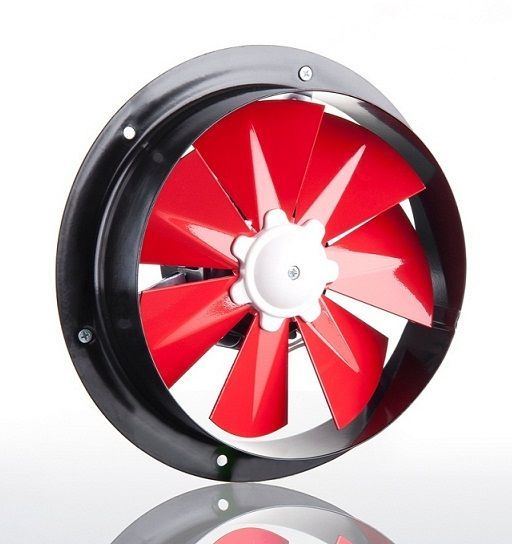
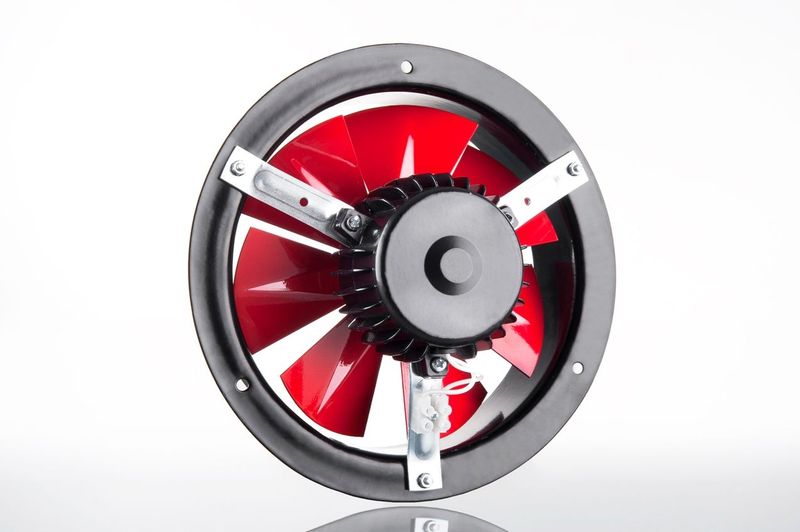
Dündar D 16 Axial Chimney and Wall Exhaust Fan, 350 m³, 1440 RPM
Request a quote: 0531 565 11 25. · Out of stock
Brand: Dündar · SKU: 102164120
Other options
- Dündar D 20 Axial Chimney and Wall Extractor Fan, 600 m³, 1,425 RPM – $59.48
- Dündar D 25 Axial Chimney and Wall Extractor Fan, 800 m³, 1375 RPM – $61.89
- Dündar D 30 Axial Chimney and Wall Extractor Fan, 1,050 m³, 1,360 RPM – $65.97
- Dündar D 35 Axial Chimney and Wall Exhaust Fan, 1,250 m³, 1,285 rpm – $67.69
Product description
|
Product Type |
V |
AC/DC |
~ |
Hz |
W |
Sound |
rpm |
m3/h |
|
D 16 |
230 |
AC |
1 |
50 |
45 |
44 |
1440 |
350 |
What Is an Axial Fan?
An axial fan is a type of fan that causes air to flow in an axial direction, parallel to the shaft on which the blades rotate. The flow is axial at both the inlet and outlet. Blades rotating around an axis draw air parallel to that axis and push it outward in the same direction. The fan is designed to generate force that creates a flow across the fan by producing a pressure difference. Axial fans generate high-velocity airflows, which produce large volumes of air movement. However, the airflows they generate are at low pressure.Where Are Dündar D Series Axial Fans Used?
It can be easily installed in the ventilation opening you cut in your chimney or wall.- Axial fans are commonly used for ventilation purposes in residential and commercial spaces. These fans provide a practical and economical solution for the ventilation needs of small areas and operate at low noise levels.
- Due to the low-pressure, high-volume airflow they generate, axial fans are used for general-purpose applications — for example, moving or cooling air from one location to another.
- Used for ventilating enclosed spaces.
- Hot air extraction in areas with high air temperatures, removal of odors and smoke in homes,
- Stale air extraction in offices
- Environments with dust, cigarette smoke, and vapor,
- Cooling of industrial machinery
- (Welding machines, transformers, compressors…)
Things to Consider When Selecting an Axial Fan
4 parameters should be considered when selecting a fan:- Required Air Flow Rate
- Pressure Losses
- Acceptable Noise Level
- Electrical Power Connection Type
|
ENVIRONMENT |
AIR CHANGE RATE COEFFICIENT |
|
Classrooms |
5-7 |
|
Libraries |
4-5 |
|
Domestic kitchens |
15-25 |
|
Bathrooms |
5-7 |
|
Domestic restrooms |
4-5 |
|
Public restrooms |
8-15 |
|
Conference rooms |
6-8 |
|
Offices |
4-8 |
|
Changing rooms |
6-8 |
Air volumes per person in living and working spaces, depending on activity, can help determine the required air flow rate. may help.
| Normal Activity (Non-Smoking) | 29 m³/h |
| Normal Activity (Smoking) | 58 m³/h |
| Light Activity | 45 m³/h |
| Heavy Activity | 60 m³/h |
Based on the information provided above, the required air flow rate is determined as follows.
- Q [ m³/h ] = Air change coefficient (1 h) * Space volume (m³)
- Q [m³/h] = Number of persons × Required air flow rate per person
Or
Fan selection is also made based on this flow rate requirement.
After completing the flow rate calculations, the fan installation location must be determined. Where will the fan be installed? On the ceiling, wall, chimney, or ventilation duct, for example. Another consideration is the voltage of the electrical supply to be connected to the fan. Continuing with our office example: fans are typically mounted on walls or windows in offices. If a domestic electrical supply is used, a single-phase fan should be preferred. For use in an industrial setting, a fan operating on three-phase (380 V) power should be used.Dündar D Series Axial Fan Housing and Blade Components
- Casing made of cold-drawn, high-quality DKP sheet steel and aluminium fan blades,
- High corrosion resistance through environmentally friendly electrostatic epoxy powder coating,
- Fan blades dynamically balanced in accordance with ISO 1940 standards,
- Low Noise Level
- High-quality production on advanced CNC machines without manual intervention, production,
- Aluminum-finned motor casing with high thermal conductivity,
- Class F insulation for windings with a wide operating temperature range −40° to +70°,** 230 V / 50 Hz single-phase fan motor,***
- Standards-compliant certified components,
- IP 44 protection class,
Dündar D Series Axial Fan Motor
Technical Specifications & Dimensions
Specifications
| Brand | Dündar |
|---|
Similar products
- Modern Teknik Axial Chimney and Wall Exhaust Fan, 25 cm, 220V, 1,500 RPM, 1,500 m³/h – $203.76
- Nano Water Filter, 1 Inch – $171.69
- Fansan Decorative White Bathroom and Toilet Glass and Window Ventilation Fan – $10.62
- Aircol 20 K Shuttered Axial Fan / Extractor, 360 m³/h – $34.03
- Modern Teknik 0.5 HP Low-Pressure Open-Blade Centrifugal Fan, 45 mmWG, 2,000 m³/h – $485.23
- Aircol 100 mm Duct Inline Round Fan 390 m³/h 2300 rpm - Aircol 100 KF – $48.17
- Raksan Smart ABS Plastic Marine Anemostaat, 100 mm – $4.61
- Dündar MF 280 Axial Fan (EBMPAPST W2E250-HL06-01 Compatible), 280x280x85 mm, 230 V – $94.17
- 65 cm Industrial Pedestal Fan 65 cm – $111.75
- Aircol 150C MP Glass and Wall-Mount Axial Fan – $31.84