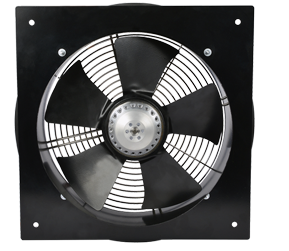
Aircol 250 MS Square Sheet Metal Axial Fan, 2,000 rpm, 900 m³/h
Request a quote: 0531 565 11 25. · Out of stock
Brand: Aircol · SKU: Aircol-250-MSKare
Other options
- Aircol 200 MS Steel Casing Axial Fan, 2,000 rpm, 900 m³/h (out of stock)
- Aircol 200 MS Square Sheet Metal Axial Fan, 2,000 rpm, 900 m³/h (out of stock)
- Aircol 250 MS Sheet Metal Axial Fan, 2,400 rpm, 1,485 m³/h (out of stock)
- Aircol 300 MS Sheet Metal Axial Fan, 1,950 rpm, 2,065 m³/h (out of stock)
- Aircol 300 MS Square Sheet Metal Axial Fan, 1,950 rpm, 2,065 m³/h (out of stock)
Product description
What Is an Axial Fan?
An axial fan is a type of fan that causes air to flow in an axial direction, parallel to the shaft on which the blades rotate. The flow is axial at both inlet and outlet. The blades rotating around an axis draw air parallel to that axis and push it outward in the same direction. The fan is designed to generate force by creating a pressure difference, causing flow through the fan. Axial fans produce airflow with a high flow rate, generating large volumes of airflow. However, the airflow they produce is at low pressure.AREAS OF USE
- In spaces of various sizes
- Used for ventilating factories, workshops, paint shops, cabinets, garages, greenhouses, enclosed animal shelters, electrical panels, and similar locations.
- Designed to exhaust stale and contaminated air or to supply fresh air from outside to inside.
Features
- The body and impeller are made from galvanized steel sheet; thanks to the electrostatic paint applied, the product is resistant to erosion, heat, and moisture.
- The product has a minimum vibration level and has successfully passed dynamic and static balance tests conducted in accordance with ISO 1940 standards.
- Protection against external factors is provided by the chrome-plated wire guard on the rear.
- With the optimized body and impeller design, higher pressure is achieved at the same flow rate while noise levels are minimized.
- Wall, metal plate
- can be easily mounted vertically or horizontally on windows and similar surfaces.
- With models in different sizes, it is suitable for use in spaces of various dimensions.
Things to Consider When Selecting an Axial Fan
4 parameters should be considered when selecting a fan:- Required Air Flow Rate
- Pressure Losses
- Acceptable Noise Level
- Electrical Power Connection Type
|
ENVIRONMENT |
AIR CHANGE RATE COEFFICIENT |
|
Classrooms |
5-7 |
|
Libraries |
4-5 |
|
Domestic kitchens |
15-25 |
|
Bathrooms |
5-7 |
|
Domestic restrooms |
4-5 |
|
Public restrooms |
8-15 |
|
Conference rooms |
6-8 |
|
Offices |
4-8 |
|
Changing rooms |
6-8 |
The amount of air per person in living and working spaces depending on activity level can help determine the required air flow rate.
| Normal Activity (Non-Smoking) | 29 m³/h |
| Normal Activity (Smoking) | 58 m³/h |
| Light Activity | 45 m³/h |
| Heavy Activity | 60 m³/h |
Based on the information provided above, the required air flow rate is determined as follows.
- Q [ m³/h ] = Air change rate coefficient (1 hour) × Space volume (m³)
Or
- Q [ m³/h ] = Number of people × Air flow rate required per person
Fan selection is also made based on this flow rate requirement.
After completing the flow rate calculations, the installation location of the fan should be determined. Where will the fan be mounted — ceiling, wall, chimney, or ventilation duct? Another consideration is the voltage of the electrical supply to the fan. Continuing with our office example: fans in offices are generally mounted on a wall or glass. If a domestic electricity supply is used, a single-phase fan should be preferred. If it is to be used in an industrial setting, a fan operating on three-phase (380 V) power should be used.Specifications
| Brand | Aircol |
|---|
Similar products
- Modern Teknik Axial Chimney and Wall Exhaust Fan, 25 cm, 220V, 1,500 RPM, 1,500 m³/h – $203.76
- Nano Water Filter, 1 Inch – $171.69
- Fansan Decorative White Bathroom and Toilet Glass and Window Ventilation Fan – $10.62
- Aircol 20 K Shuttered Axial Fan / Extractor, 360 m³/h – $34.03
- Modern Teknik 0.5 HP Low-Pressure Open-Blade Centrifugal Fan, 45 mmWG, 2,000 m³/h – $485.23
- Aircol 100 mm Duct Inline Round Fan 390 m³/h 2300 rpm - Aircol 100 KF – $48.17
- Raksan Smart ABS Plastic Marine Anemostaat, 100 mm – $4.61
- Dündar MF 280 Axial Fan (EBMPAPST W2E250-HL06-01 Compatible), 280x280x85 mm, 230 V – $94.17
- 65 cm Industrial Pedestal Fan 65 cm – $111.75
- Aircol 150C MP Glass and Wall-Mount Axial Fan – $31.84